Leopoldine Wing of the Hofburg, From the Bedroom of Maria Theresa to the Office of the Austrian President
When Austria swears in a new government, the ceremony takes place in a Rococo room in the Hofburg called the Maria Theresa Room. It was once the state bedroom of Maria Theresa and her husband, Francis Stephen. Since 1946 it has been where the Federal President receives prime ministers, ambassadors and visiting heads of state.
The wing it sits in, the Leopoldinischer Trakt, is the long range between Heldenplatz and the inner courtyard, In der Burg. From the outside it's the plainest part of the palace. Inside it has held power, of one kind or another, for more than three centuries.
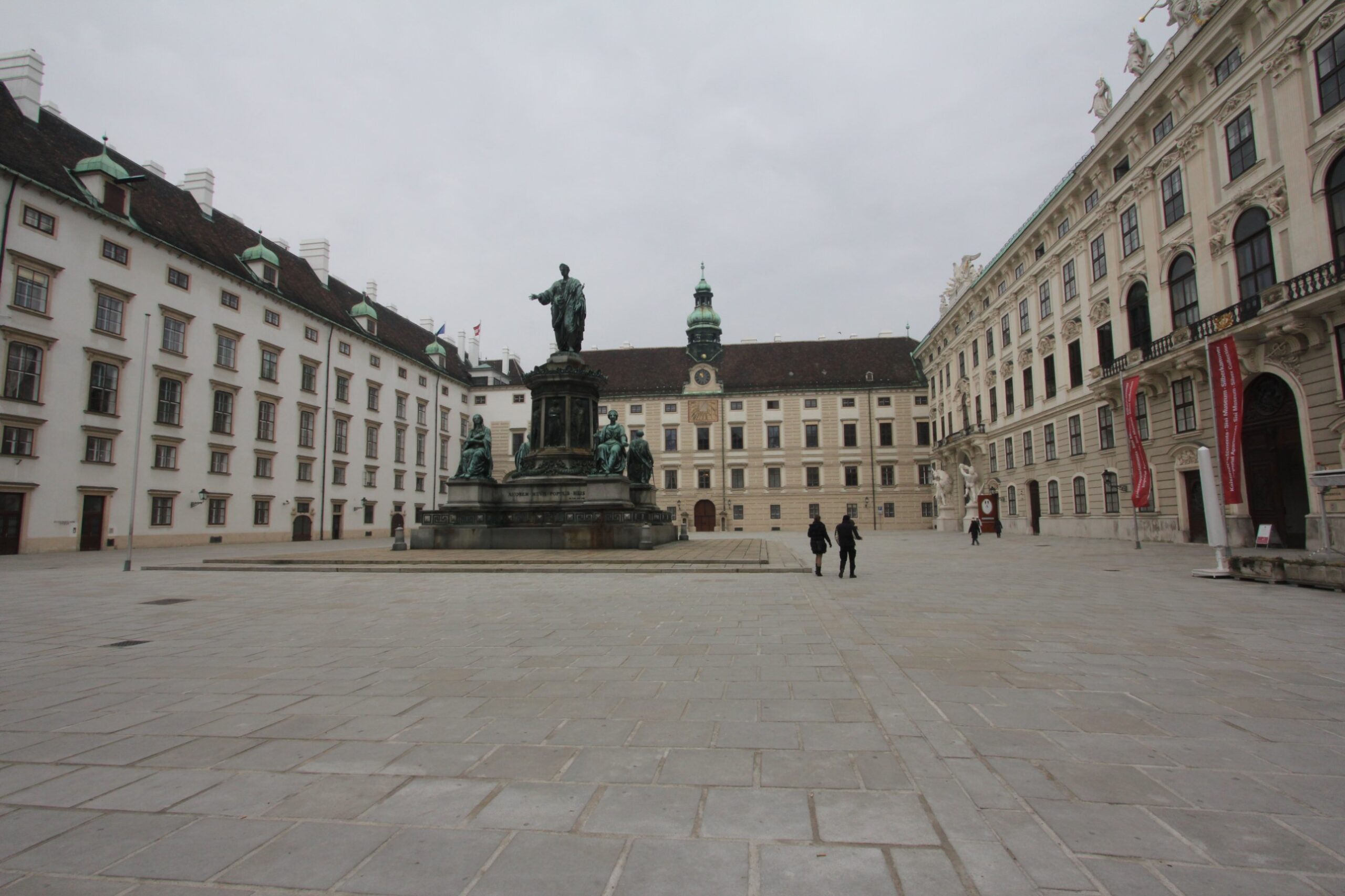
Photo: Virtual Travel Guide
Built twice
Leopold I started it in 1660 to link the medieval castle around the Schweizerhof with the Amalienburg across the courtyard. Filiberto Lucchese drew the plans. On the night of 23 February 1668, with the wing nearly done, it burned.
Leopold had it rebuilt from November 1668 to designs by Giovanni Pietro Tencalla, who added a storey. It was finished in 1683, in time to be damaged again in the Ottoman siege that summer. The plain façade you see from Heldenplatz is about all that's left of Leopold's building.
Maria Theresa's rooms
When Charles VI died in the Hofburg on 20 October 1740, his daughter Maria Theresa, 23, inherited lands that half of Europe immediately tried to take from her. She and her husband, Francis Stephen of Lorraine, moved into the state apartment in the Leopoldine Wing. It became her home and the seat of her government for forty years.
Her court architect Nikolaus Pacassi remodelled the rooms between 1749 and 1757, giving them the Rococo interiors that survive in part today.
Her son Joseph II used the same apartment and added rooms of his own. He was the first ruler to separate the state rooms, where an emperor received and governed, from private rooms where he actually lived. His Green Salon is the Federal President's office now.
The Republic moves in
After 1918 the President of the new republic worked out of the Federal Chancellery on Ballhausplatz, across the street. Those rooms were damaged by bombing in the Second World War. Karl Renner, elected President on 20 December 1945, moved the office into the Leopoldine Wing, and it has been there since October 1946.
The rooms carry their layers openly. The Maria Theresa Room's state bed went to Schönbrunn, and the room became the President's reception room. The hunting room was a casino for Soviet officers between 1945 and 1955, when Vienna was under four-power occupation. The small Josephskapelle was once reached by Maria Theresa through a door disguised as a cupboard.
Seeing it
The President's offices aren't a museum and there's no regular visit. The Presidential Chancellery has in some years opened its doors on 26 October, Austria's National Day, with tours that take in the Maria Theresa Room. In 2025 it opened from 10:00 without registration. Check bundespraesident.at for the current year before you go.
The rest of the time, walk into the courtyard In der Burg from the Michaelertor. The long range that joins the Swiss Gate side of the courtyard to the Amalienburg is the Leopoldine Wing. The other side of it faces Heldenplatz.
The Habsburgs ruled from this palace from the late 13th century until 11 November 1918, when Charles I gave up any part in the business of the state and left Schönbrunn with his family the same day for Eckartsau, east of Vienna. He never formally abdicated. The Republic was proclaimed the next day, and within three decades its head of state was working in Maria Theresa's bedroom.