Spanish Riding School in Vienna, How the Performance, Morning Exercise and Stable Tour Compare
The Spanish Riding School is the oldest working part of the Hofburg. It's been training horses here since at least 20 September 1565, the date of the first document that mentions a riding place in the palace garden, where Josefsplatz is now. The same year work began on turning the Stallburg, a Renaissance palace finished in 1560 and never lived in, into the court stables. The Lipizzaner stallions still sleep there.
The name confuses people. Nobody rides Spanish horses. The Lipizzaner breed comes from the stud Archduke Charles II founded in 1580 at Lipica, near Trieste, and the "Spanish" refers to the Iberian horses that went into it. Since 1920 the Austrian herd has been bred at Piber in western Styria.
You can see the horses three ways, and they're very different things.

The hall
Performances and training both happen in the Winter Riding School, built from 1729 to 1735 for Charles VI. Johann Bernhard Fischer von Erlach designed it and his son Joseph Emanuel built it. It's a long white hall with galleries on columns and chandeliers. A portrait of Charles VI on horseback hangs in the royal box, and riders still salute it when they ride in.
The hall has had other lives. Maria Theresa held carousels and balls in it from the 1740s. In 1848 it hosted the first session of Austria's elected parliament.
UNESCO added the school's classical horsemanship to its list of intangible cultural heritage in 2015, the year the school turned 450.
Three ways to see the stallions
The performance. The show people mean when they say they've "seen the Lipizzaners". Mostly Saturdays and Sundays at 11:00, about 70 minutes, with some Friday evening shows at 19:00. You get the school quadrille, work on the long rein, and the jumps above the ground that made the school famous. As of October 2026, seats for the 11:00 shows run from €50 to €155 depending on the category, and standing places cost €33. December galas cost more.
The morning exercise. The everyday training session with music, Tuesday to Friday from 10:00, about an hour. Riders work young and older stallions on the movements they'll perform later. The big jumps are rare. It's the better choice if you want to watch horses rather than a show, and it's far cheaper: from €18 standing to €29 for the best seats for adults between April and October, a euro less in November and from January to March.
The guided tour. About an hour in English, German or Spanish, through the Winter Riding School, the Summer Riding School with its oval horse walker, and the Stallburg stables. It's the only way to see the horses up close in their boxes, and the only time you're allowed to take photos, when the guide says so. Tours run hourly in the afternoon. Adults €24.
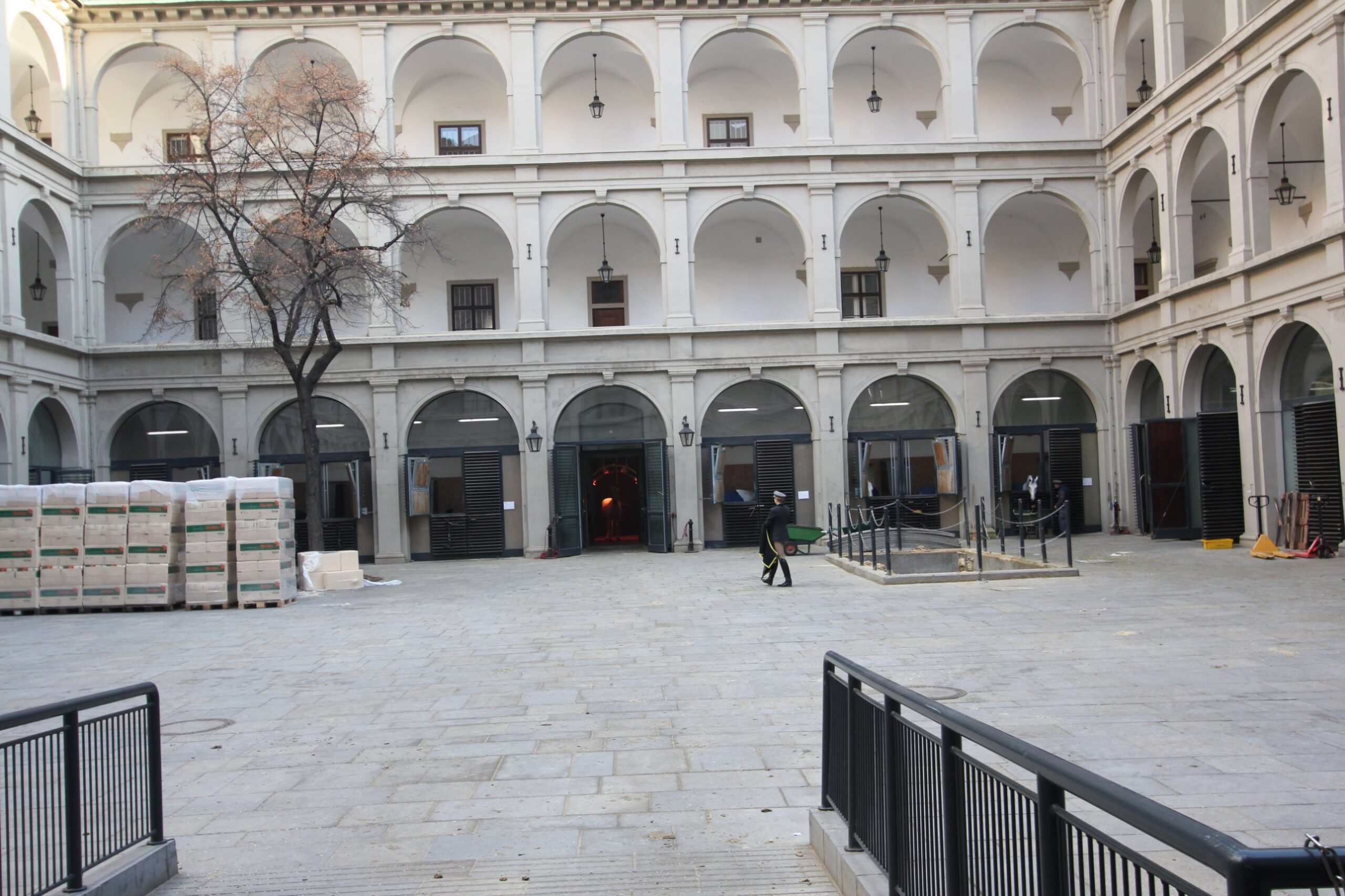
Photo: Virtual Travel Guide
Before you go
Book on the school's own webshop, srs.at, or at the visitor centre on Michaelerplatz 1, under the dome. Tickets from resellers have to be exchanged at the desk. There's no combined ticket with the other Hofburg museums.
The hall isn't heated. Bring a coat in winter. There's no cloakroom and no lift; the galleries are up stairs. Children under three aren't admitted. No photos or filming during performances or morning exercise.
In July there are no performances or morning exercise. The stallions spend the summer at the Lipizzaner training centre at Heldenberg in Lower Austria, and only tours run in Vienna. Performances come back in August.
The visitor centre is a few steps from the entrance to the Sisi Museum and Imperial Apartments, so the two fit easily into one morning.