Fiaker Horse Carriage Rides at the Hofburg, Vienna Michaelerplatz Stand, Routes and Prices
Walk out of the Michaelertor, the domed gate of the Hofburg, and the first thing you'll hear is hooves. A row of open black carriages waits along the palace wall on Michaelerplatz, two horses to each, the horses dozing in their blinkers while the drivers wait for fares. These are the Fiaker, Vienna's horse-drawn cabs, and the Hofburg stand is one of the busiest in the city.
They're not a palace attraction. The Fiaker are private, licensed businesses, and they work several squares in the old town. But Michaelerplatz is where most visitors meet them, right under the Hercules statues of the gate.
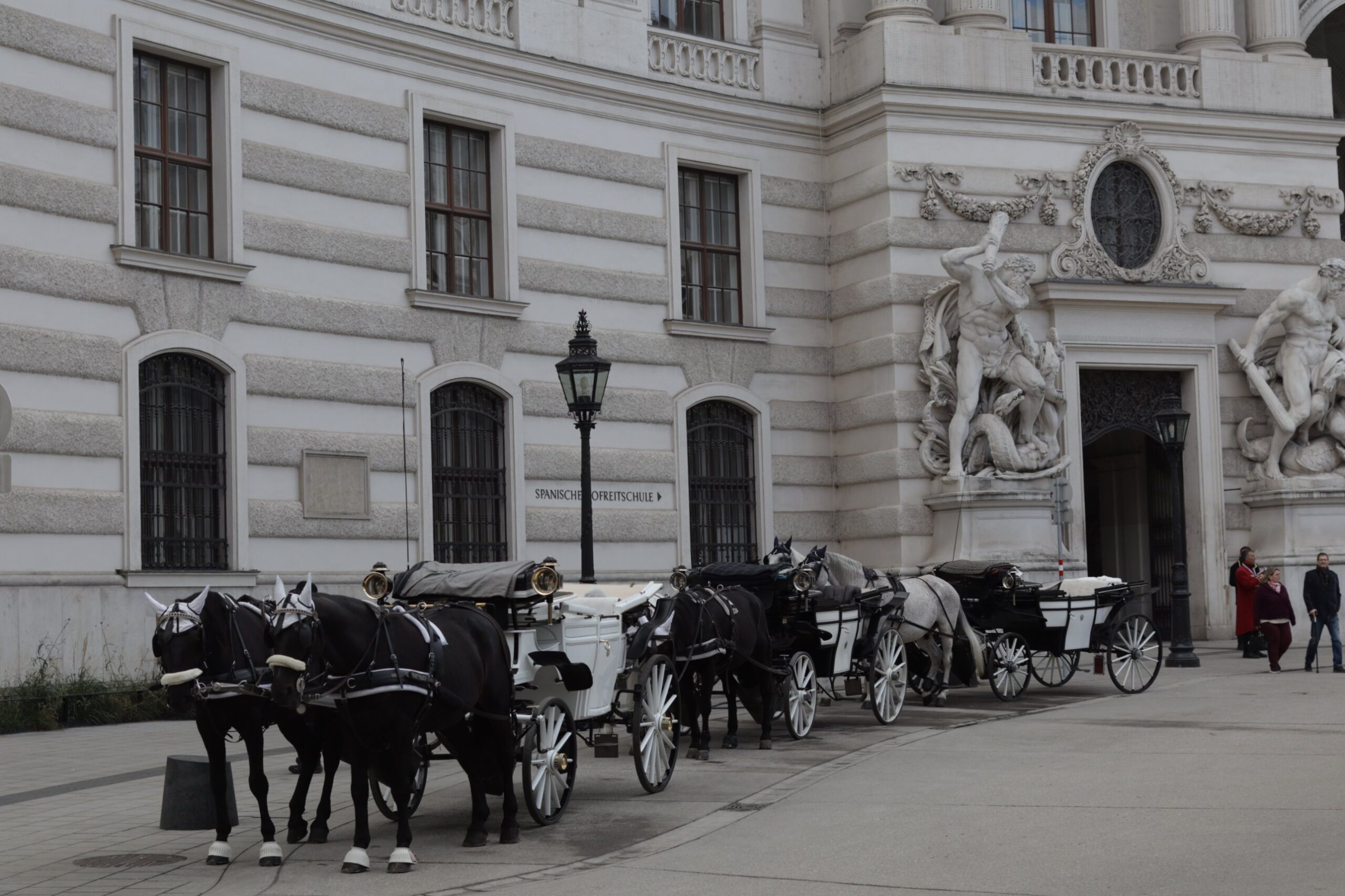
Photo: Virtual Travel Guide
Where the name comes from
Fiaker is a French word that came to Vienna with the carriages. In 17th-century Paris, hire coaches stood outside a house on the Rue Saint-Fiacre, and the cabs took the street's name. In Vienna the carriages for hire were numbered and called Fiaker by 1720. Between 1860 and 1900 more than a thousand of them worked the city.
The drivers, also called Fiaker, were local characters, valued for their discretion. The most famous was Josef Bratfisch, coachman to Crown Prince Rudolf, who drove Mary Vetsera to Mayerling in January 1889, a few days before the crown prince and the young baroness were found dead there.
The stands and the routes
In the old town the Fiaker wait at Michaelerplatz, Stephansplatz, Albertinaplatz, Petersplatz and by the Burgtheater and Volksgarten. There are six stands in the Innere Stadt with 58 places between them. You'll also find them at Schönbrunn, in front of the palace, at the Prater and at the Central Cemetery.
From the Hofburg the standard tours are:
- Short tour, about 20 minutes through the old town: €60.
- Long tour, about 40 minutes through the old town and along the Ringstraße: €105.
Those are the prices Vienna Tourism lists as of October 2026, per carriage, not per person, and a carriage takes up to four. Confirm the price and route with the driver before you get in. Private tours can be arranged directly with the Fiaker companies.
The long tour is the one that makes sense from Michaelerplatz if you want the Ringstraße, the boulevard built where the city walls stood, with its parliament, museums and theatres. The short tour stays in the old town's lanes and squares.
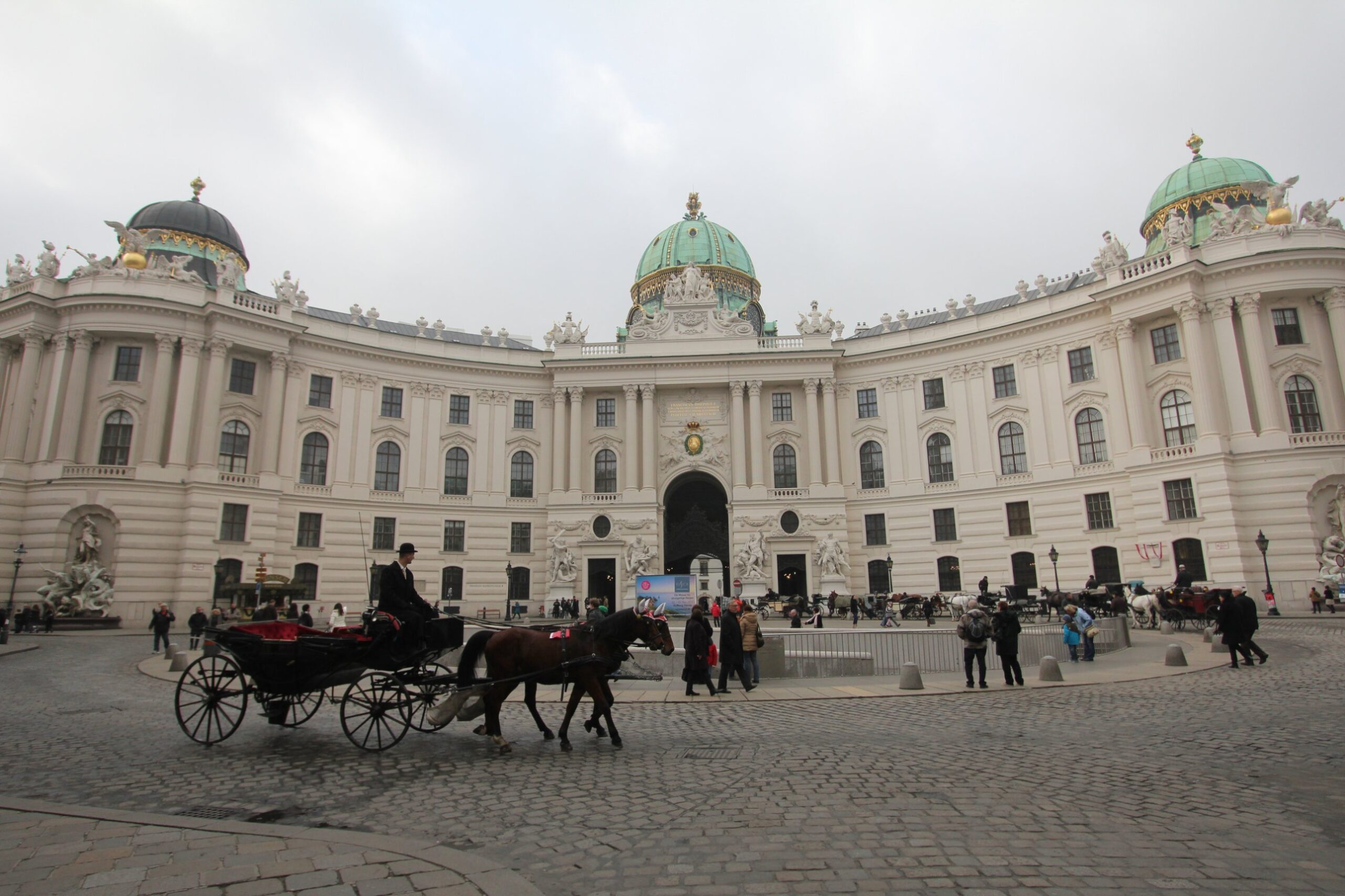
Photo: Virtual Travel Guide
Many of the drivers still wear the old Fiaker outfit, dark coat and bowler hat, and a carriage rolling out across the cobbles in front of the Michaelertrakt is about as Viennese a picture as you'll get.
The horses and the heat
The Fiaker have been argued over for years, mostly about summer. Under Vienna's current rule they stop working when the shade temperature in the city reaches 35 degrees. Animal welfare groups and the Greens in the inner city district have pushed for 30 degrees, pointing out that the asphalt on the stands gets far hotter than the air. The city has said it wants a scientific study before it changes the limit, and some shaded stands under trees have been built near the Ring.
If that matters to you, ride on a cool day, or in the morning, and look at the horses before you choose a carriage. The drivers are used to the question.
Nearby
The Fiaker stand faces the entrance to the Imperial Apartments and the Sisi Museum under the dome. Through the gate is the Swiss Gate, and around the corner on Josefsplatz is the State Hall of the National Library. For the real imperial horses, the Lipizzaners, see our Spanish Riding School guide: the signpost on the palace wall in the photo points the way.