Prince Eugene Monument on Heldenplatz, the Second Fernkorn Horseman and the Sculptor Who Could Not Finish It
Prince Eugene of Savoy rides in front of the Neue Burg on a rearing horse, baton in hand, facing Archduke Charles across Heldenplatz. It's the second of the square's two bronze horsemen and the sadder story. The sculptor who began it was too ill to finish it, or even to attend its unveiling.
It was unveiled on 18 October 1865, on Eugene's birthday, the year before Austria's defeat by Prussia at Königgrätz.
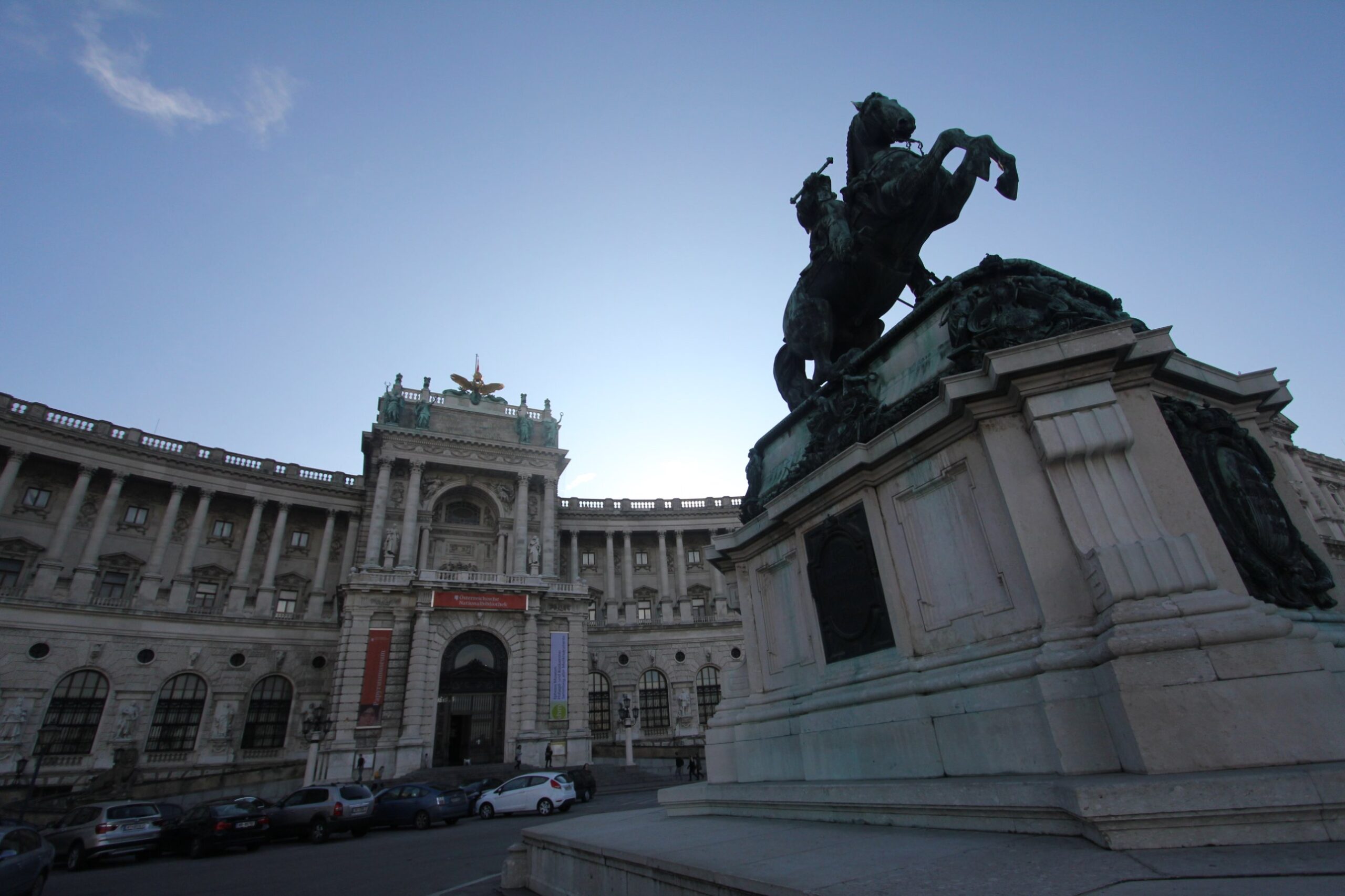
Photo: Virtual Travel Guide
The prince
Eugene was born in Paris on 18 October 1663, a prince of the house of Savoy brought up at the French court. Louis XIV turned him down for a commission, so he went to serve the Habsburgs instead, and he served three emperors: Leopold I, Joseph I and Charles VI.
His victories helped make Austria a great power. He crushed the Ottomans at Zenta in 1697, beat the French with Marlborough at Blenheim in 1704, relieved Turin in 1706, and took Petrovaradin in 1716 and Belgrade in 1717. With the money he built the Belvedere, two palaces by Johann Lukas von Hildebrandt, finished in 1723, and collected one of the great private libraries of the age. About 15,000 of his books now stand in the State Hall of the National Library, around the statue of Charles VI.
He died in Vienna in 1736 and is buried in St. Stephen's Cathedral.
The monument
After the success of Archduke Charles, the commission for a matching statue of Eugene went to the same sculptor, Anton Dominik Fernkorn, in October 1860. The contract was signed that November.
Fernkorn was already unwell. He had a slight stroke in 1859 and a severe one in 1862, and by 1864 his doctors judged him incurable. The statue was largely completed by Franz Pönninger, working in Fernkorn's imperial art bronze foundry. Fernkorn spent his last years in a private asylum and died in 1878.
The horse rears like Charles's, but it is not balanced on two hooves. It rests on its hind legs and its tail. Critics have usually ranked it below its partner. The tail is the first thing to look for when you walk round it. The pedestal is polished Untersberg marble, with ornament drawn by Eduard van der Nüll, who also designed the Charles pedestal.
The inscriptions honour Eugene as the wise adviser of three emperors and the glorious victor over Austria's enemies, and list his battles from Zenta to Belgrade. The aim was plain: to present the house of Austria as defender of Christian Europe against the Ottomans, and to remind Hungary who had freed it.
In the Second World War the statue was walled in with brick to protect it from the bombing.
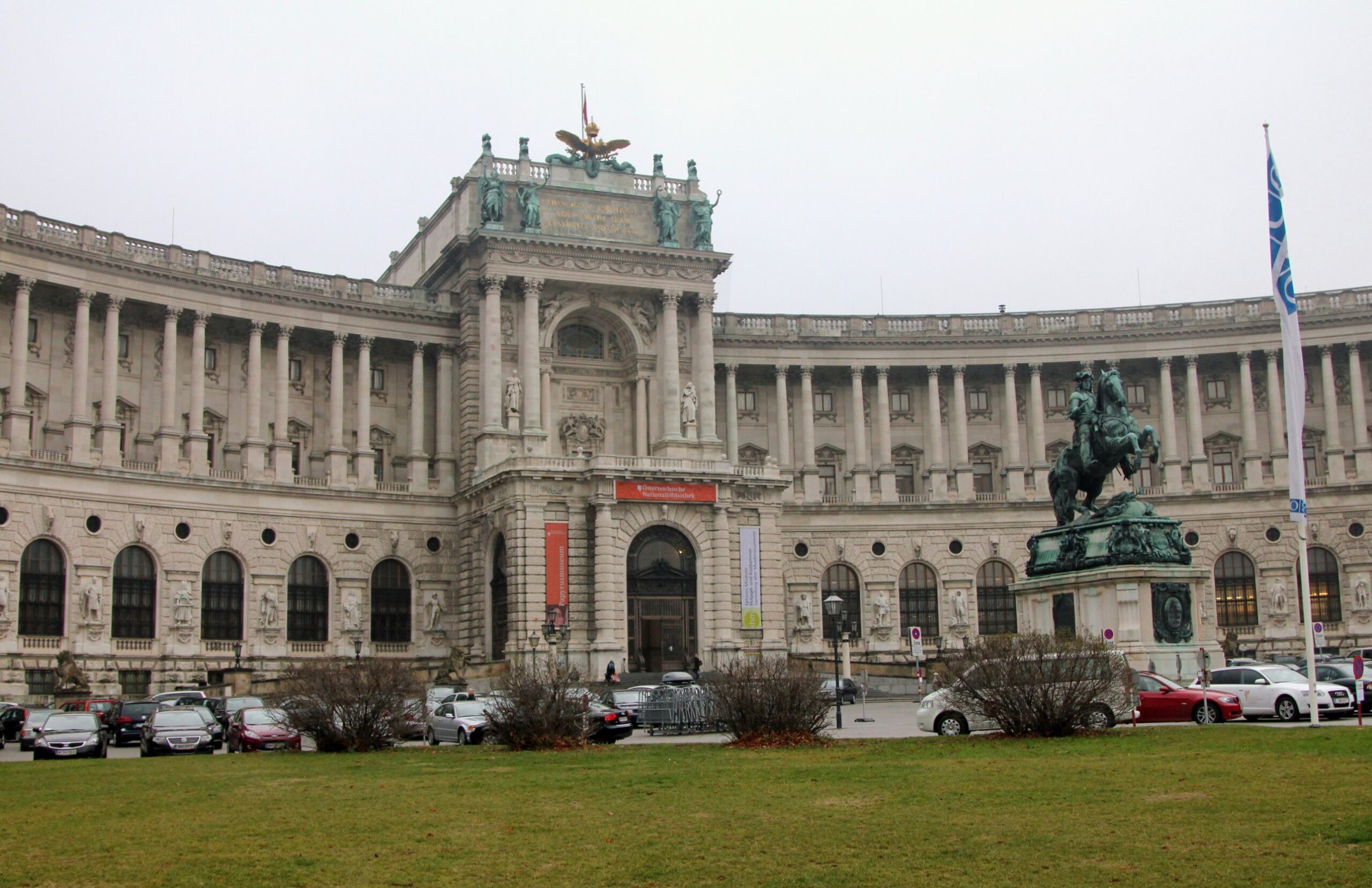
Photo: Virtual Travel Guide
Seeing it
It stands right in front of the Neue Burg, so the museums inside make a natural next stop. For the square and the rest of its history, see our Heldenplatz guide.